Official Chemitek distributor · Southern Africa
Precision Chemistry for Peak Energy Performance
Advanced cleaning and protection solutions designed to remove soiling, protect sensitive surfaces, and maximise asset performance across solar, wind, and industrial applications.
Soiling-loss calculator
What is soiling costing your solar plant?
Dust, cement, bird droppings and hard-water scale build up between cleans, and South Africa’s long dry seasons give them time to bond to the glass. Put in your plant size and how often you clean to see what the lost energy costs you each year.
- 4–7%average global energy loss to soiling, and growingIEA PVPS fact sheet, 2025
- 0.2% a dayclose to what an uncleaned tracker plant in Pretoria lost over a dry winterCSIR data in IEA PVPS, 2022
How we work
From site visit to a cleaning programme your O&M team can run
Solar panel cleaning chemicals only work when they suit the contaminant, the water, the cleaning method and the plant. When you bring us in, our engineers check all four on site, prove the result on your own strings and write the method down for your O&M team.
01 · Assess
We come to site.
An engineer walks the plant with your O&M team, inspects the glass, photographs the soiling and samples your cleaning water. Where it helps, we set up reference panels or a soiling sensor. On CSP plants we measure mirror reflectivity.
Checks: glass, water, soiling
02 · Analyse
We find the cause.
We identify what is on the glass: dust, cement, bird droppings, lichen, iron oxide or scale. We measure how fast it builds up, check your water against your module maker’s limits and review how, and how often, you clean today.
Soiling rate: % a day
03 · Pilot
We prove it on your strings.
Test strings are cleaned beside untouched control strings and read in the same irradiance window, so the gain is measured on your own plant. Free for utility-scale and large C&I plants.
Measured: test strings vs control strings
04 · Optimise
We design how you clean.
Method, interval, water treatment, brushes, equipment and crew procedure, written as a method statement your O&M team can run. It names each Chemitek product with its dilution and dosing.
Hand-over: method statement
05 · Monitor
We keep measuring.
Soiling sensors and reference panels keep reading the plant. We review the data with your team and move the cleaning dates as seasons and dust sources change.
Soiling ratio: logged daily
Free for utility-scale & large C&I plants
We prove it on your plant before you spend a cent.
Our engineers come out to your site and work with your team. We check your soiling, your cleaning water and the contaminants on the glass. Then we run a pilot: a few test strings are cleaned, and comparable control strings beside them are left untouched. We read both under the same sun and prove the result with your own plant’s data. You keep the results, whatever you decide.
Afterwards you get the measured results and a costed programme for the whole plant. Very large plants can also commission a full plant study.
Need something else?Soiling measurement, water testing, cleaning systems, O&M strategy and moreAll services
Solar panel cleaning for every scale
Commercial, industrial, utility-scale or farm: we set up the clean, supply the chemistry and match you with a trained crew from our partner network.
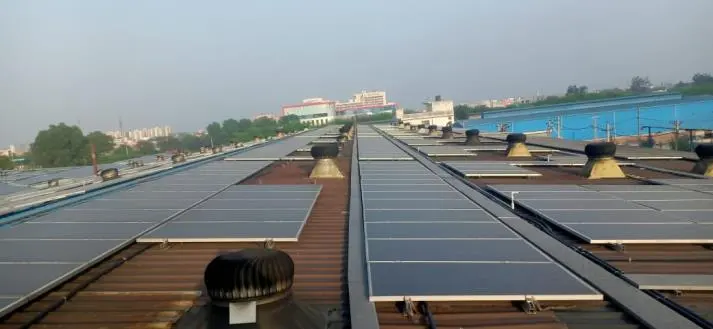
Commercial rooftops & carports
Shopping centres, offices and warehouses, cleaned within module makers’ conditions.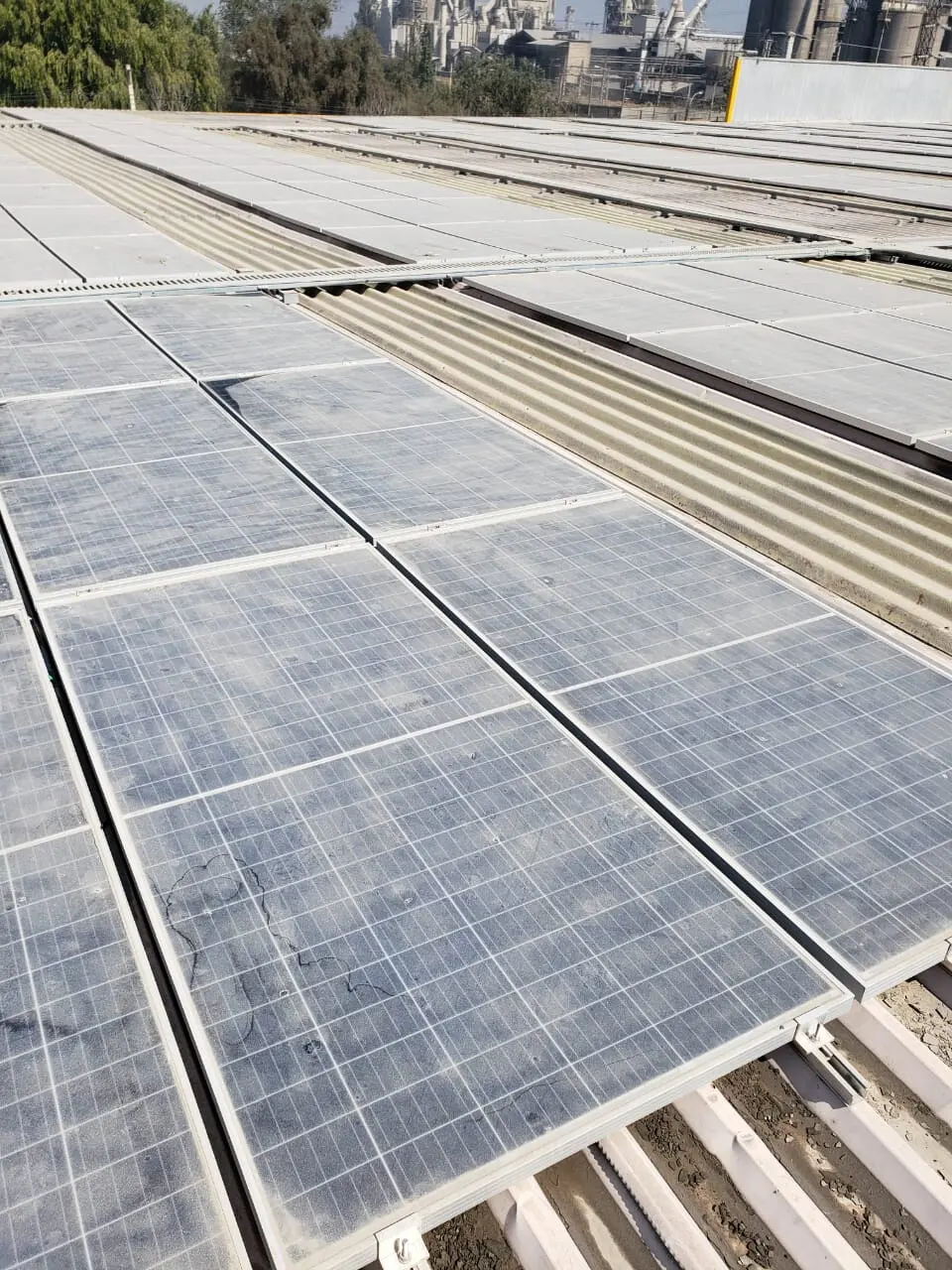
Industrial sites
Factory roofs beside cement, soot, metal dust and grease, where water alone won’t do.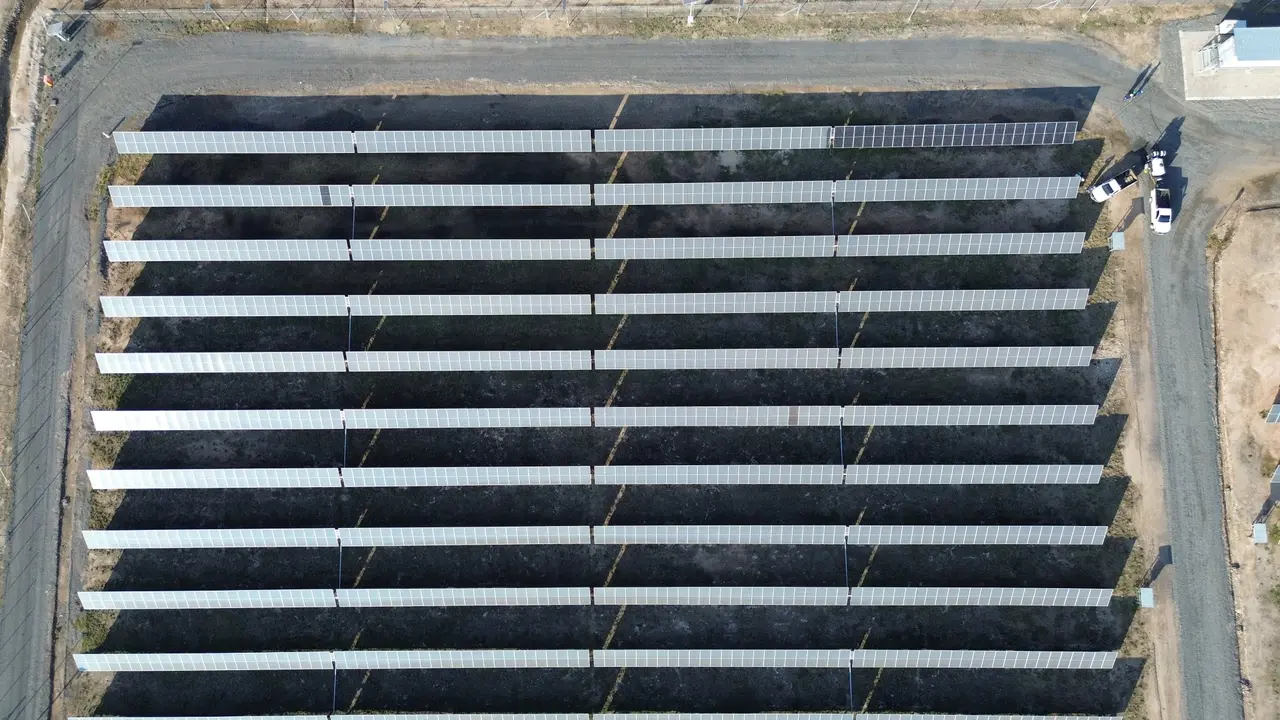
Utility-scale plants
Tracker and fixed-tilt rows, cleaned on a calendar set by your measured soiling.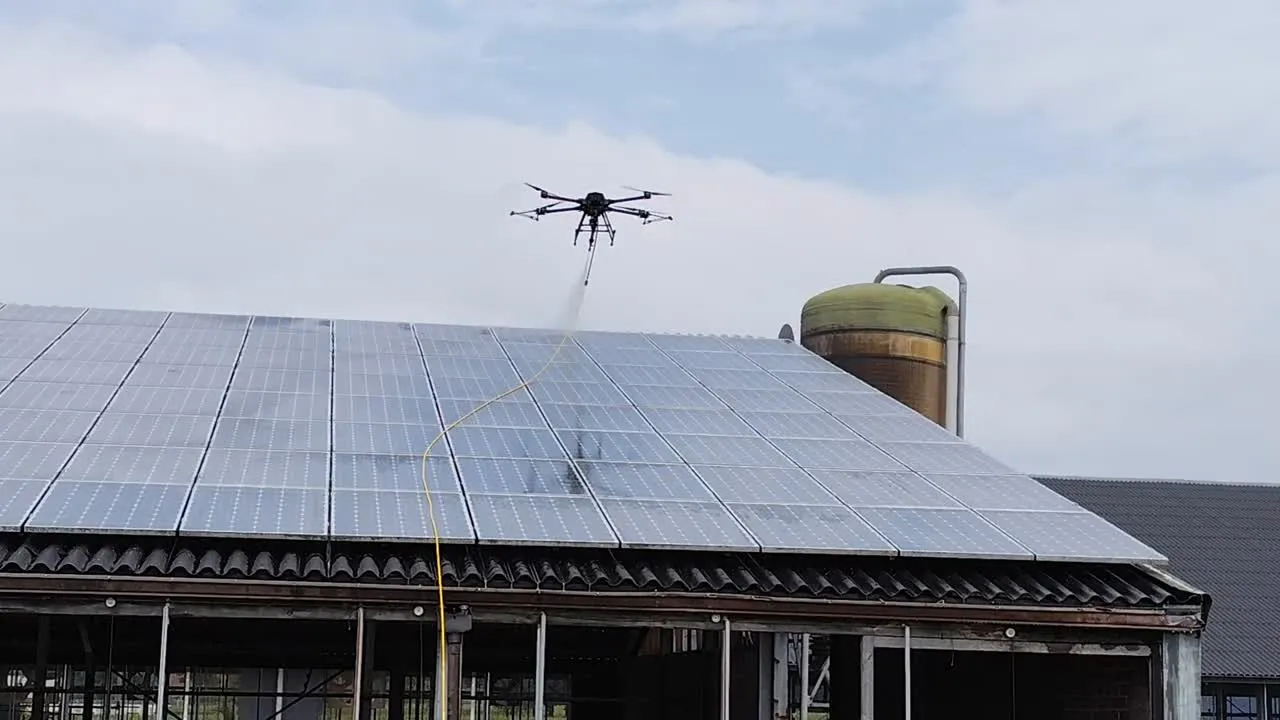
Farms & agriculture
Field dust, birds and hard borehole water on farm arrays and shed roofs.


What’s on your glass?
Soiling or contamination? They need different answers.
Soiling is the dust every plant gathers between cleans, and a normal clean takes it off. Contamination bonds to the glass: each clean leaves some behind, so the loss grows until the deposit is removed.
 |  | |
|---|---|---|
| What it is | What it isDust, sand, pollen and bird droppings that settle between cleans. | What it isCement, hard-water scale, metal oxides and lichen that bond to the glass. |
| Over time | Over timeComes back after every clean: a steady, routine loss. | Over timeGrows clean after clean. Water and brushes leave it behind. |
| The fix | The fixSolar Wash Protect or Antistatic Solar Armor 2.0 in the clean you already do. | The fixRemove it with Inorganic, Metal Oxides or Lichen Removal Agent, then protect with Antistatic Solar Armor 2.0. Never scrape: it can void the module warranty. |
| Field results | Field resultsUp to 5% more energy than water-only cleaning (Chemitek). Measured: +1.8% and +2.9% in Honduras, +2.78% in Malaysia. | Field resultsGap to a clean reference cut from 6.6% to 2.1% in Dubai. A shortfall that grew every month, brought from 12.6% to 3.8% in Türkiye. |
| Who it’s for | Who it’s forAlmost every commercial, industrial and utility-scale plant. | Who it’s forPlants near cement works, quarries, mines, farms or the coast, and plants washed with hard water. |
| Next step |
The two charts are illustrations, not measured data. They show what Chemitek’s cases found: routine water cleans left the gap open in Dubai, and in Türkiye the shortfall grew every month until the deposit was removed.
Not sure which you have? It’s the first thing our engineers check on site. Soiling and contamination assessment
Case study · North West Province · 24 June 2026
How one test string shaped the programme for a cement‑dusted solar plant
Dust from a neighbouring cement works had cured onto a ±15.6 MWp plant of about 25,000 modules, and water washing no longer removed it. So we tested one string with Chemitek Inorganic Removal Agent, alongside the plant’s O&M team.
01 The problem
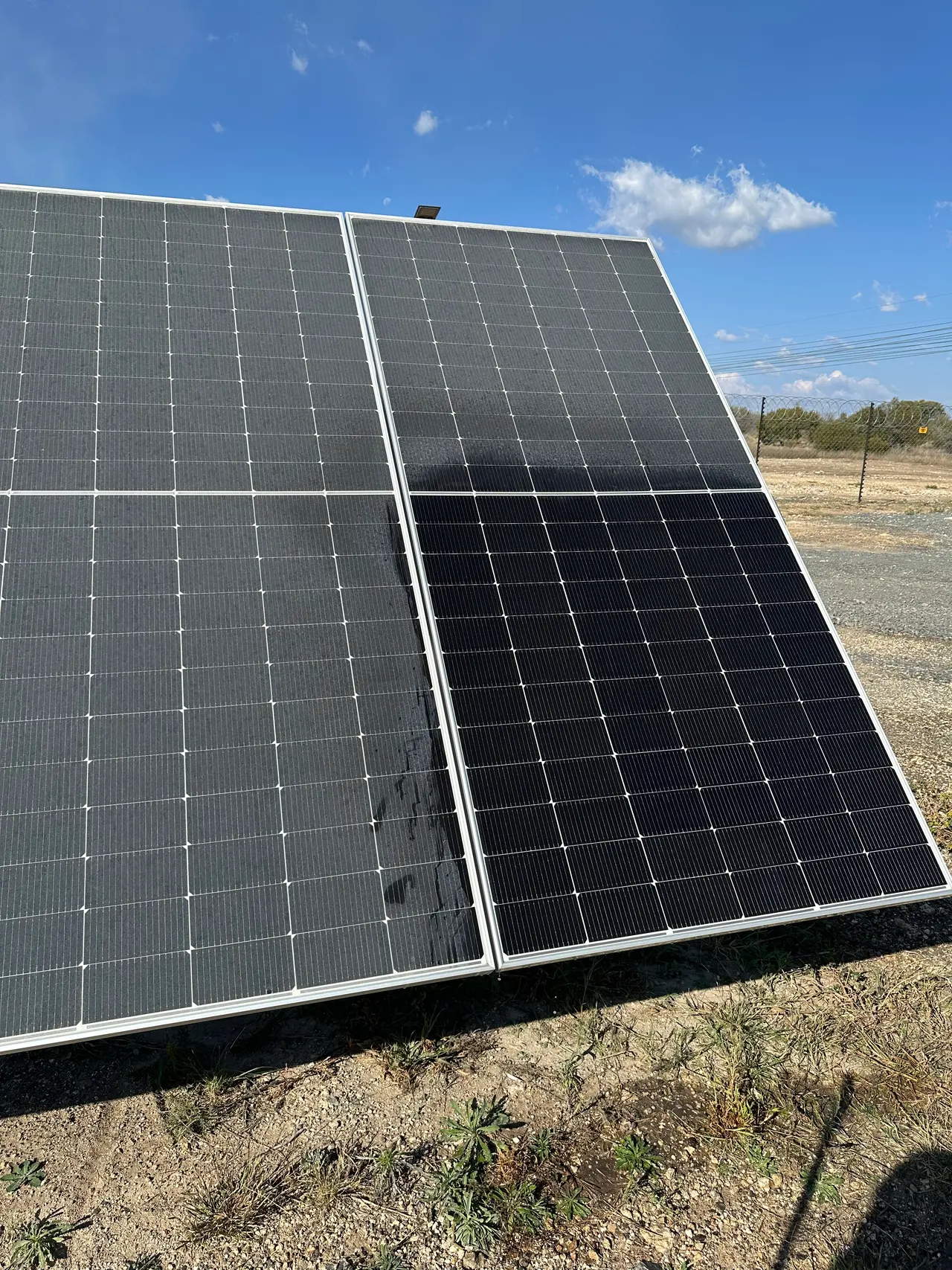
Cement dust had cured into a film on the glass. The site’s cleaning water tested ±250 ppm as CaCO₃: hard.
02 The pilot
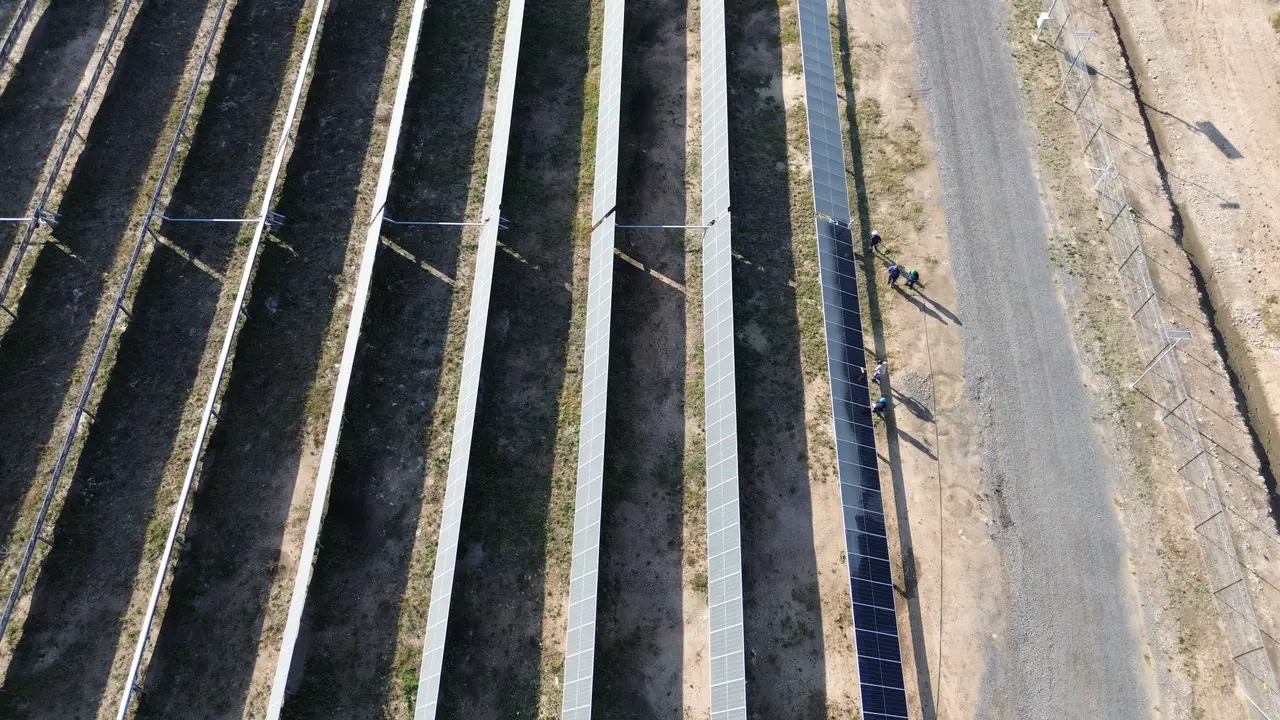
With the plant’s O&M team, we cleaned one string with CRA and read it by clamp meter against comparable uncleaned strings, in the same irradiance window.
03 The result
String current, same irradiance window, by clamp meter
+7.2% more current than comparable uncleaned strings
One string, one day, one treatment, before any coating: not an annual energy figure.


+ From current to power
Cleaner glass also runs cooler, so the power gain is higher
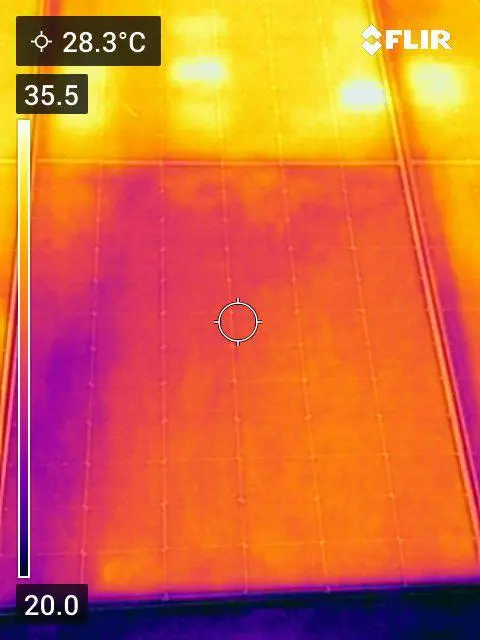
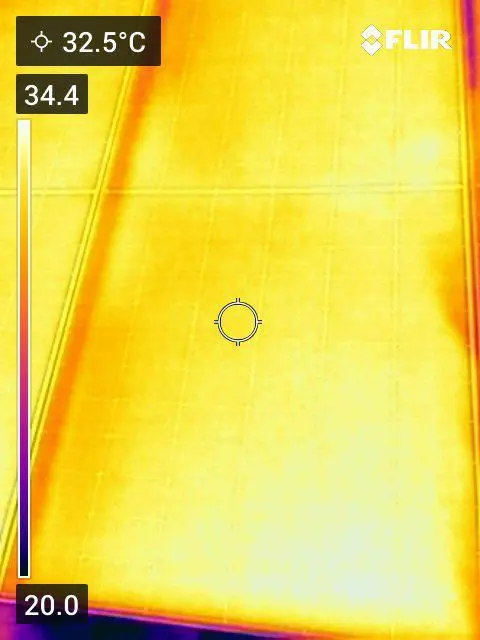
We measured current. On the thermal camera the same day, cleaned modules read 26.9–28.3 °C against 32.5 °C on an uncleaned one, about 5 °C cooler, and a cooler module holds more voltage. Together that puts the power gain nearer 9% than 7%.
Power ≈ current × voltage. A cooler module holds more voltage: about 0.3–0.4% more power per °C, from module datasheet temperature coefficients. Front-glass camera readings are indicative, and we didn’t measure string voltage, so the cooling part is an estimate.
How we read the thermal images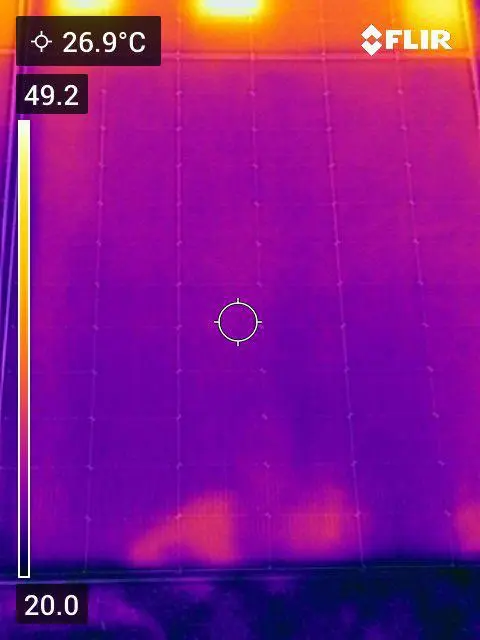


The programme it shaped
Written as a washing procedure the plant’s own crews run on a 24-month calendar.
- RestoreInorganic Removal Agentremoves the cured cement, row by row
- ProtectAntistatic Solar Armor 2.0applied straight after, so new dust bonds less
- MaintainSolar Wash Protect 50routine cleans, on water softened with WSA
Two ways to work with us
Buy the products, or bring in our engineers too
Start with one and add the other later: most O&M teams order Chemitek for their own crews, others want the problem measured and solved.
Order for your own crews
Buy any Chemitek product from RenewChem, official Southern African distributor. No service contract and no pilot needed. We send the safety and technical datasheets and help you set the dilution for your water.
Let our engineers solve it with you
We measure the soiling, your water and what’s on the glass, prove the result on your own strings, and write the cleaning method with your O&M team. Your contractor keeps the contract and the crews.


Wind turbines · Drone cleaning
Wind turbine blade cleaning by drone. No rope teams, no cranes.
Insects, oil, soot and dust build up on a blade’s leading edge, disturb the airflow and cost output. We clean blades, towers and nacelles by drone with Chemitek’s Drone Wind Turbine Cleaning Agent, or supply the agent to your own maintenance team.
Select a step to jump to it. The dwell is shortened in the animation; the method needs five minutes.
Book it, or do it yourself
We plan and fly the clean, or supply the agent and the method to your maintenance team. If the inspection finds erosion rather than dirt, we say so.
Guides & blog
Guides and field notes on soiling and contamination
In-depth guides for O&M teams and asset managers, and shorter posts from our engineers on what we see on site. Every number names its source.


Chemitek and free pilots
Common questions
Still have a question?
Ask one of our engineers. Tell us about your plant and we’ll answer it properly.
Send your questionWho distributes Chemitek in South Africa?
RenewChem (Pty) Ltd is official Southern African distributor of Chemitek PV-safe cleaning, anti-soiling and removal products, and part of Chemitek’s distributor network. We are also specialist O&M engineers, with our head office in Cape Town, support sites in Johannesburg and Upington, and a presence across South Africa: we measure soiling, run pilots and design cleaning programmes with plant owners and O&M teams. To order, call 021 301 0230 or email [email protected].
Can we buy Chemitek products without using your services?
Yes. O&M contractors and plants with their own cleaning crews can buy Chemitek products from us on their own. Our soiling measurement, pilots and programme design are optional, for clients who want the whole problem solved.
Which plants qualify for a free pilot?
Utility-scale and large C&I solar plants. Our engineers come to site, work with your O&M team, check your soiling and cleaning water, and clean test strings beside comparable uncleaned strings in the same irradiance window, so you see the difference measured on your own plant. Very large plants can also commission a full plant study. How the free pilot works.
Will Chemitek products void my module warranty?
Solar Wash Protect has letters of conformity from 18 module makers, including LONGi, JA Solar, Jinko, Trina, Canadian Solar and First Solar. Each letter applies when the product is used within that maker’s cleaning conditions, for example wet cleaning, a pressure limit and an approved brush type. Chemitek’s products are also tested by ÉMI-TÜV SÜD.
How often should a utility-scale solar plant be cleaned?
It depends on how fast your plant soils, what its energy is worth and what one clean costs, and it changes with the seasons. As a default, LONGi’s O&M manual suggests cleaning at least every 20–30 days in dry areas. Our soiling-loss calculator works out the interval that costs least for your plant, and a soiling measurement makes it exact.