
Why assess before you clean?
Soiling is not one problem. Loose dust rinses off. Cured cement, hard-water scale and lichen don’t. In dew, soluble dust dissolves and recrystallises into bonds that dry cleaning can’t break (IEA PVPS 2022). Left too long, lichens, fungi and cemented dust can become practically irremovable (Ilse et al. 2019). Clean with the wrong method and you pay for washes that leave the loss on the glass, or you scratch the anti-reflective coating trying. At a plant in Dubai, two routine water-and-brush cleans left the affected inverter about 6.7% behind a cement-free reference inverter; one clean with Chemitek Inorganic Removal Agent cut the gap to 2.06% (Case study: Chemitek (Portugal), with SirajPower).
The rate matters as much as the type. In US data, soiling ran at 0–2% a month in natural desert but up to 11.5% a month near dry farmland (IEA PVPS 2022). We found no peer-reviewed PV soiling rates for Upington, Kathu, Prieska or Kimberley. A plant there has to measure its own.
What we do on site
- Inspect the glass. An engineer walks the plant, photographs the soiling and notes its pattern: bottom edges, row ends, blocks downwind of a road, quarry or works.
- Identify the contaminant. We test-clean small areas with water only, then with the candidate removal product, to see what comes off and what stays.
- Find the source. Cement works, quarries, haul roads, farmland, bird roosts, or the cleaning water itself. The source decides whether the problem will come back.
- Test the cleaning water. We measure hardness and check it against your module maker’s limits. Hard or high-TDS water leaves deposits every time a rinse dries: see the Malaysia case and water testing.
- Measure the loss. We compare string currents on soiled and freshly cleaned strings in the same irradiance window, or use your inverter data. Where the soiling rate matters, we recommend a soiling sensor or station.
- Review your cleaning. Method, brushes, pressure, water, interval and crew procedure, checked against the module maker’s cleaning conditions.
What removes what
| Contaminant | Typical source | What removes it |
|---|---|---|
| Desert, mine and farm dust | Dry pans, haul roads, farmland | Soft water, or Solar Wash Protect for a longer-lasting clean |
| Cured cement or limestone film | Cement works, quarries, building sites | Inorganic Removal Agent, then a protective coating |
| Hard-water scale | The cleaning water itself | Water Softening Agent prevents it; Inorganic Removal Agent removes existing stains |
| Bird droppings | Roosts, perches, nearby water | Solar Wash Protect, removed early |
| Lichen, moss and algae | Humid or shaded rows | Lichen Removal Agent |
| Rust and metal oxides | Steelworks, smelters, rail lines | Metal Oxides Removal Agent |
What you get
- Findings with photos: what is on the glass, where it comes from and whether it will return.
- Measured loss: what the soiling is costing, from string or inverter data. Put it in rand with the soiling loss calculator.
- Water result: whether your cleaning water is inside your module maker’s limits.
- Cleaning review: what to change in method, equipment, interval or crew procedure.
- Recommendation: the method and Chemitek product for each contaminant, and whether a pilot or monitoring is worth it.
After the assessment
The first thing an assessment settles is whether you have soiling or contamination, because the fix and the gain differ. The recommendation, and whether a pilot is worth it, follows from that.
On utility-scale and large C&I plants, the assessment is the first step of a free pilot: we treat test strings beside control strings and measure the difference. On very large plants, it can grow into a full plant study.
If your own crews will do the cleaning, the findings tell them which Chemitek product and dilution to use.
Chemitek products for this
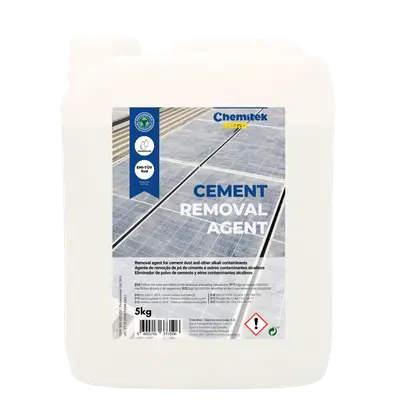
- RestoreInorganic Removal AgentDissolves cured cement dust, stone dust and gypsum that water can’t shift. 8 module-maker letters of conformity.
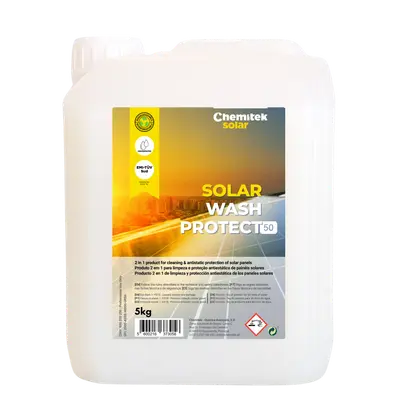
- Clean + protectSolar Wash ProtectConcentrated PV cleaner that leaves an antistatic, anti-adherent layer. 18 module-maker letters of conformity.
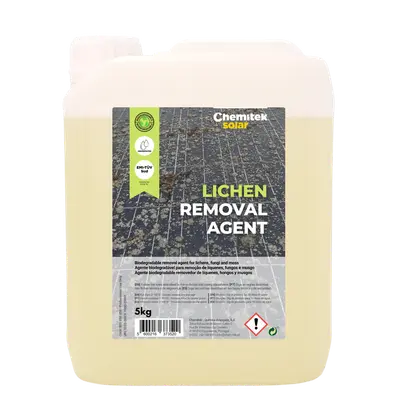
- RestoreLichen Removal AgentLoosens lichen, moss and fungi from module glass so they brush off. 4 module-maker letters of conformity.
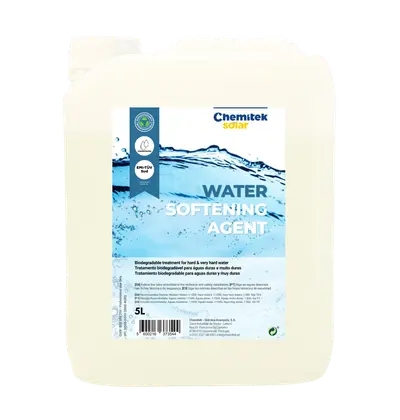
- PreventWater Softening AgentSoftens hard cleaning water in about 20 minutes, so rinses don’t leave scale.
Running your own crews? You can order just these products from us, with or without our engineers.


